Design trends come and go, but few styles stay as beloved as the country French kitchen. Warm, rustic, elegant, and irresistibly welcoming — it’s a design approach that feels lived-in yet refined, practical yet beautiful. And whether you’re renovating your entire space or simply refreshing a few elements, understanding what makes this style so timeless can help you bring authentic charm into your home.
As someone who has helped homeowners plan French-inspired interiors for more than a decade, I’ve seen why this look continues to captivate families, entertainers and design lovers. In this guide, you’ll learn the essential elements of a country French kitchen, how to make the style functional, how to adapt it to modern life, and what small details truly elevate the design.
Content
What Exactly Defines a Country French Kitchen?
They blend rustic farmhouse character with graceful European refinement. Imagine soft textures, distressed wood, stone accents, thoughtful details, and a layout designed for real cooking and gathering.
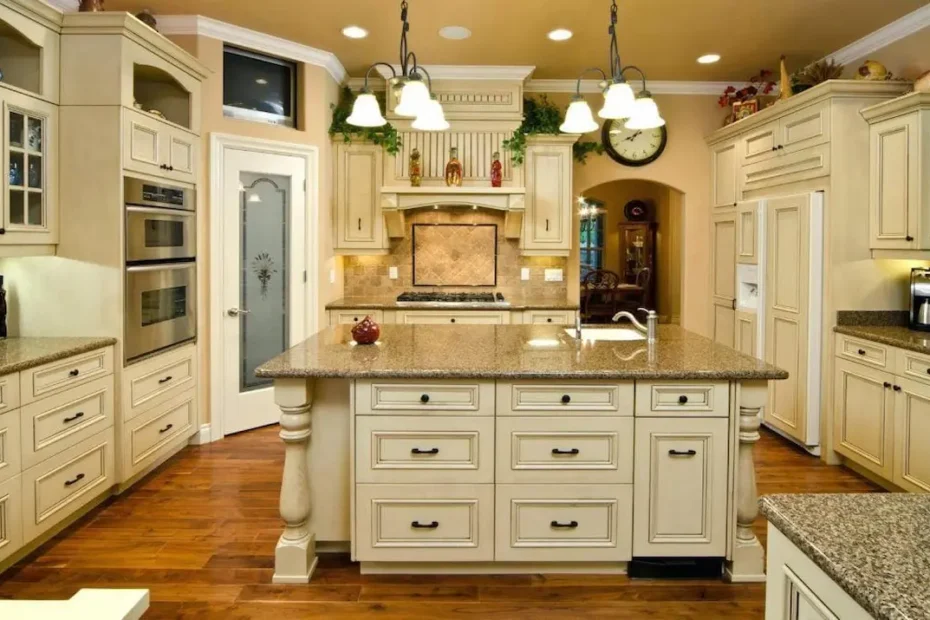
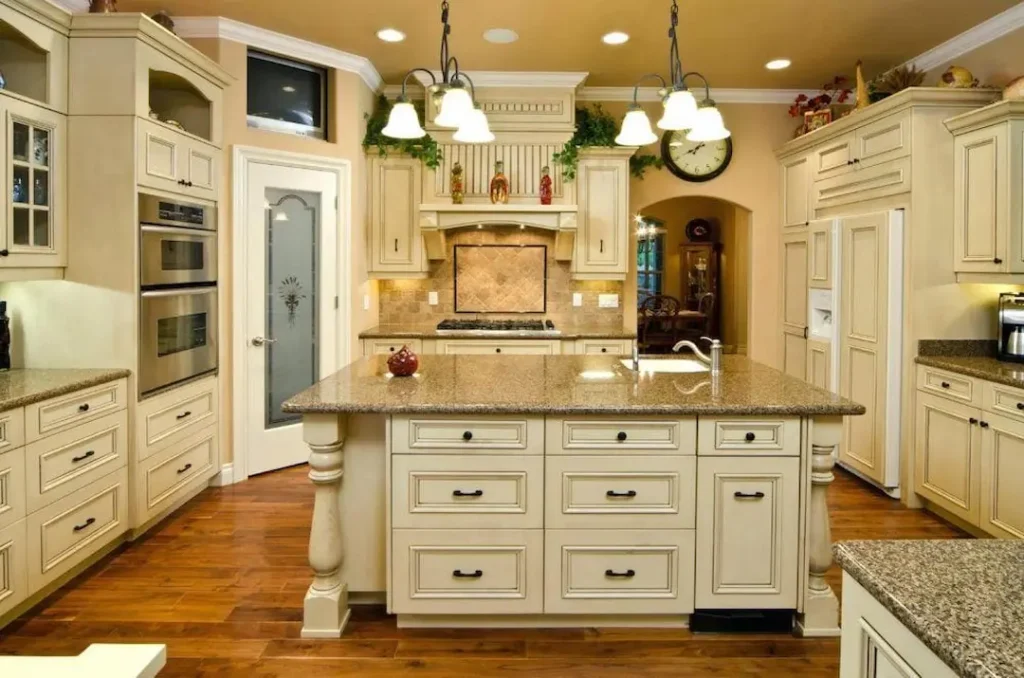
A Mix of Rustic and Refined
Country French kitchens balance opposites beautifully:
Textures like weathered wood and smooth stone
Vintage hardware paired with modern appliances
Neutral palettes enhanced by rich accent colors
This thoughtful contrast creates a warm, lived-in feel.
Designed for Comfort and Everyday Living
These kitchens are built around food, family, and hospitality. That means:
Open, breathable layouts
Multi-purpose islands
Generous storage
Decorative pieces that still feel practical
Even if you’re not in Provence or the French countryside, your kitchen can evoke the same effortless charm.
Key Elements That Give a French Country Kitchen Its Signature Look
Instead of focusing on trends, French country design prioritizes timeless materials and natural finishes. Here are the defining components:
1. A Soft, Warm Color Palette
Country French kitchens rarely rely on stark colors. Instead, they feature tones like:
Cream
Muted beige
Soft greys
Warm whites
Antique blues or sage greens
These colors make a room feel cozy and balanced.
2. Distressed Wood and Natural Materials
Distressed cabinets, reclaimed wood beams, handmade tile backsplashes, or matte stone countertops add character. The imperfect texture is what makes the space charming.
3. Farmhouse Sink With Decorative Fixtures
Apron-front farmhouse sinks — often in fireclay or porcelain — are essential. Pair them with brushed brass, antique bronze, or soft matte black fixtures.
4. Stone or Terracotta Flooring
Stone tile, patterned ceramic, or terracotta instantly elevate the character of the room while staying easy to maintain.
Decorative Details That Make a Country French Kitchen Feel Authentic
The beauty of this style lies in its small details. The right accessories make everything feel layered and personal.
1. Open Shelving and Display Cabinets
French kitchens take pride in beautiful things — vintage plates, rustic cookware, glass jars, and handmade ceramics. Open shelves or glass-front cabinets help display them naturally.
2. Wrought Iron and Curved Hardware
From cabinet pulls to bar stools, wrought iron adds an artisanal touch. These metal finishes help balance soft colors with subtle contrast.
3. Vintage or Antique Accessories
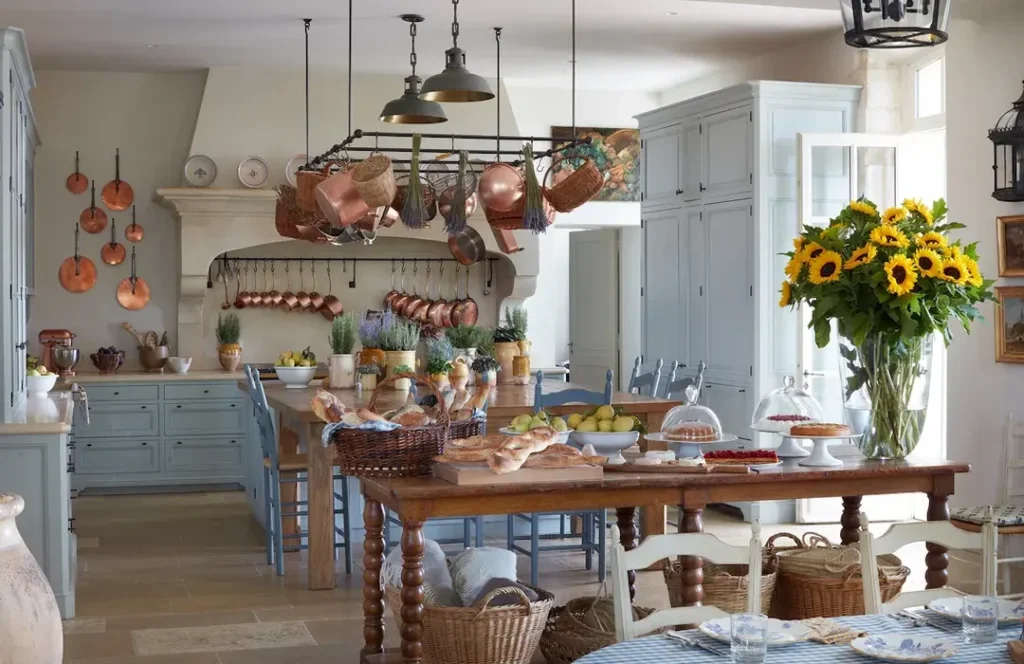
A few well-chosen vintage items can transform the room:
Copper pots
Hand-woven baskets
Aged chopping boards
Antique-inspired lighting
Patterned linens
Together, these items make the style feel authentic rather than staged.
French Country Kitchen Ideas for a Welcoming, Cozy Atmosphere
You don’t need a full remodel to this look kitchen. Here are high-impact ideas:
1. Use Statement Lighting
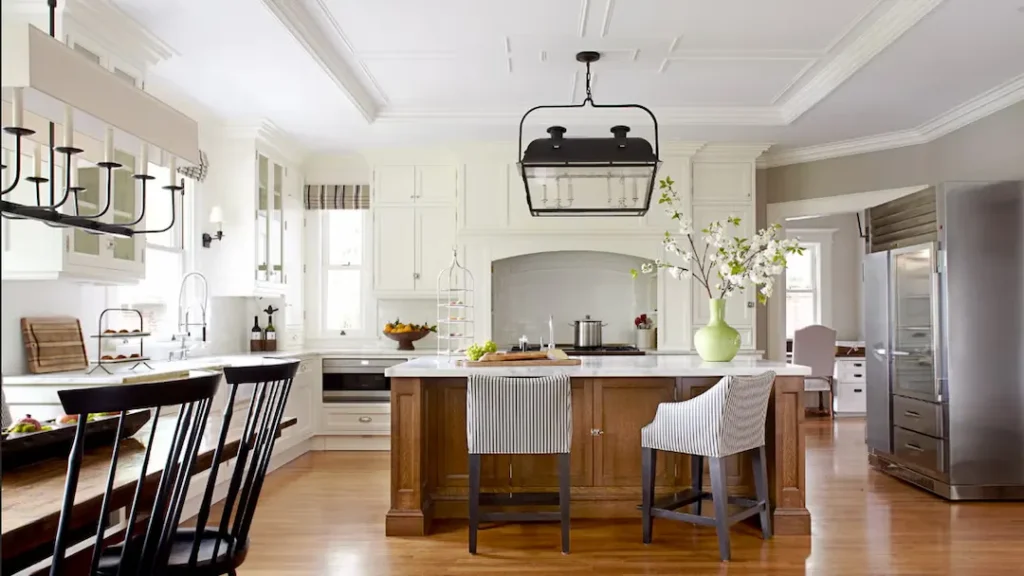
Choose warm-toned lighting with curved metal, glass shades, or vintage-inspired silhouettes. Lighting is one of the easiest ways to pull the look together.
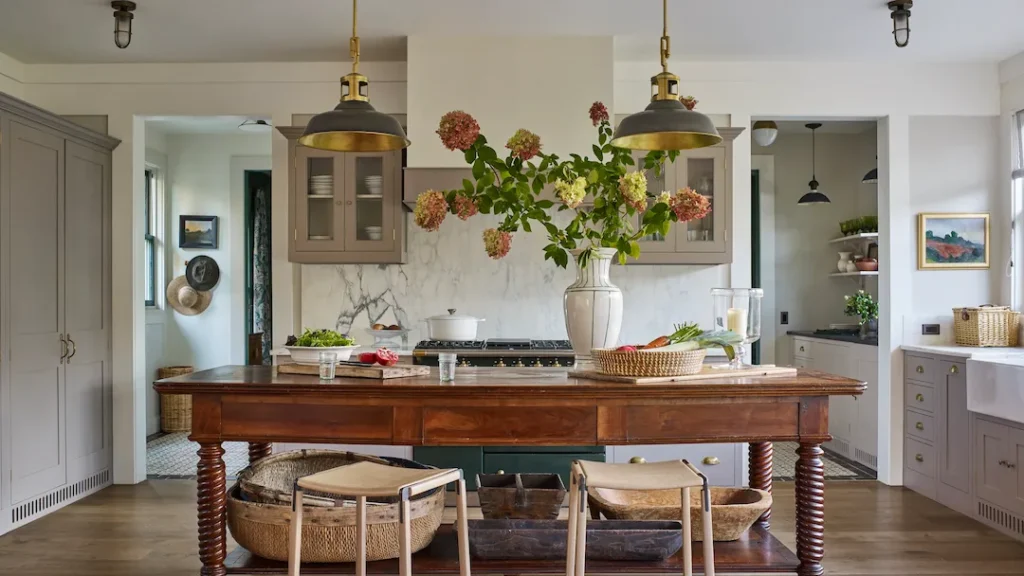
2. Incorporate a Rustic Kitchen Island
A wood island — distressed, natural, or reclaimed — becomes the centerpiece of the kitchen. It also adds practical prep and seating space.
3. Add Vintage Accessories and Greenery
Dried lavender, fresh herbs, or olive branches bring nature indoors. They also connect well with French aesthetics.
Mixing Functionality With Beauty: Designing for Modern Living
A well-designed country French kitchen isn’t just beautiful — it’s highly functional.
1. A Spacious, Practical Layout
The French design approach values:
Open pathways
Clear sightlines
Prep zones separated from cooking zones
Comfortable seating
Even small kitchens can adopt these principles.
2. Thoughtful Storage Solutions
Add built-in cabinetry, deep drawers, open shelving, and vertical storage to keep the space clutter-free. French kitchens rarely feel messy — because storage is intentionally planned.
Bringing Nature Indoors
Natural elements reinforce the earthy aesthetic.
Fresh or Faux Greenery
Olive trees, herbs, lavender pots, or eucalyptus create instant charm.
Maximizing Natural Light
Large windows, sheer curtains, and soft-toned walls help light bounce beautifully through the kitchen.
Color Pairings That Truly Elevate a Country French Kitchen
Soft, Neutral Pairings
Cream cabinetry with brushed brass and natural oak accents create a serene, timeless palette.
Bold Yet Classic Accents
Antique blue, deep mustard, terracotta, or muted green add warmth without overwhelming the space.
Real-Life Case Study: A Family Transforms Their Outdated Kitchen
A few years ago, I worked with a couple who wanted to convert their outdated 90s kitchen into a country French kitchen without tearing down the entire room. Their goal was a cozy, functional space where they could entertain and cook together.
Challenges:
Dark, heavy cabinetry
Poor lighting
Limited storage
No visual character
What We Did:
✔ Painted cabinets in soft “antique cream” ✔ Added distressed wood open shelves ✔ Installed a fireclay farmhouse sink ✔ Replaced harsh lighting with two wrought iron pendants ✔ Introduced a reclaimed-wood island ✔ Added terracotta floor tiles ✔ Styled the kitchen with copper pots, herbs, and woven baskets
Outcome:
The space transformed dramatically. Their kitchen instantly felt brighter, more open, and more welcoming. What surprised them most was how little needed to change structurally — thoughtful styling made all the difference.
Today, their kitchen remains the family’s favorite gathering place, and the design still feels fresh years later — which proves how timeless the country French style truly is.
Common Mistakes to Avoid
To keep your kitchen looking authentic and cohesive:
Don’t mix too many metal finishes
Avoid overly glossy materials
Don’t overcrowd open shelves
Avoid bright, harsh colors
Don’t ignore practicality for aesthetics
Balance is everything.
Final Thoughts: Why This Style Remains a Favorite
A country French kitchen blends warmth, charm, and practicality in a way few styles can match. It’s timeless because it’s human — built around food, family, texture, and everyday life. Whether you adopt a few elements or redesign your whole kitchen, this style brings unmatched comfort and beauty to any home.
If you’re planning your own country French-inspired space, start small, focus on natural materials, embrace character, and let your personality shine through your choices. That’s the secret to creating a kitchen you’ll love for years.
FAQs
What colors work best in a Country French kitchen?
Soft neutrals, warm creams, muted blues, and gentle greens create a cozy, authentic Country French kitchen look.
How do I add rustic charm without a full renovation?
Use open shelving, wooden accents, vintage décor, and antique-style hardware to bring rustic charm affordably.
What materials define a Country French kitchen style?
Natural wood, stone, wrought iron, and textured finishes are key materials in Country French kitchen design.
How do I make a small kitchen feel more French country?
Light colors, glass-front cabinets, slim furniture, and open shelving make a small French country kitchen feel bigger.
Are Country French kitchens expensive to create?
Not always—mix vintage finds, painted cabinets, and simple rustic décor for a budget-friendly French country look.
My name is Author Name. I post about home improvement ideas and how to make your home look beautiful and liveable. I hope my posts will help you with your DIY projects!